
INDUSTRY-SPECIFIC SOLUTIONS
We offer a wide range of products tailored to various industries, including automotive, home appliances, electronics, and medical sectors.
We stand out in the industry by utilizing the latest technologies in the design and production of plastic injection molds. We also Manufacture Blow Mold, Thermo-forming Mold, Thermo-setting Plastic Mold, Die Casting Mold (aluminum, metal) & EPS Mold.
We offer a wide range of products tailored to various industries, including automotive, home appliances, electronics, and medical sectors.
The high-quality materials we use in our molds allow us to deliver long-lasting and durable products. Each mold is meticulously produced with customer satisfaction as our priority and goes through rigorous quality control processes.
Our services encompass die maintenance, die emergency repair and die refurbishment inclusive of all logistical arrangements, such as collecting dies from your factory and transporting them to our center for restoration or bringing our mobile repair equipment to your facility.
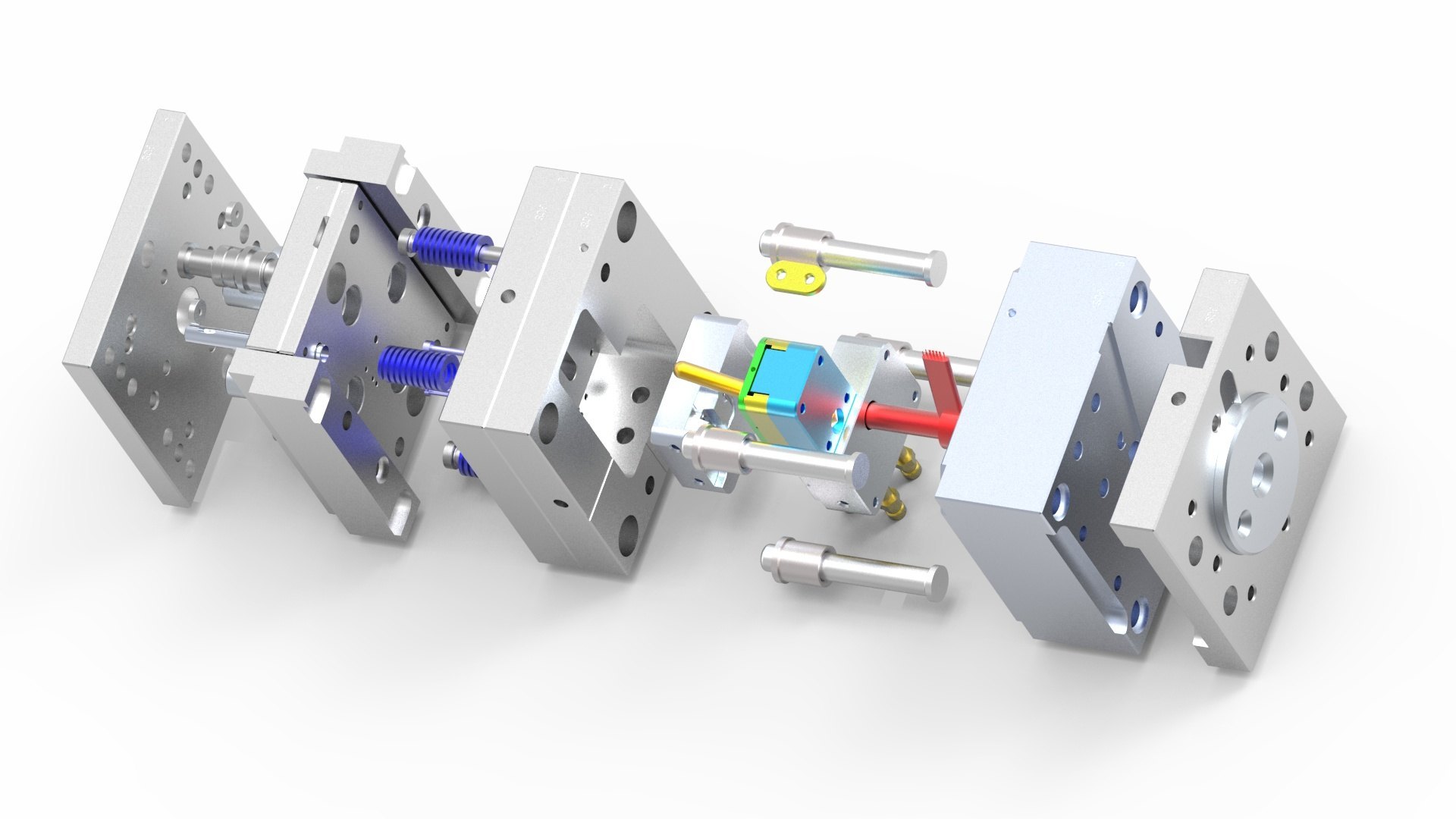
We create a 3D digital model of the part and the tool using Computer-Aided Design (CAD) software. Software simulations (like Mold Flow) predict how material will fill the cavity and cool, helping to identify potential defects like warping or air pockets before any physical work begins.
High-grade tool steels like H13 or P20 are commonly used because they can withstand high pressure and thermal shock.
Computer Numerical Control (CNC) mills and lathes are used to carve out the main geometry of the mold cavity and core with extreme precision. For intricate details, sharp corners, or hard metals that traditional bits can't cut, EDM uses electrical sparks to erode the material into the desired shape.
The machined components undergo a vacuum heat treatment process to increase their hardness and durability. Surfaces are polished—sometimes to a mirror finish—to ensure the final parts have a smooth surface and release easily from the tool.
All individual parts (cavities, cores, slides, and ejector systems) are assembled into the mold base. The completed tool is mounted on a press (like an injection molding machine) for its first test shots. The test parts are measured using a Coordinate Measuring Machine (CMM) to verify they meet all dimensional tolerances.
It is a privilege for us to provide quality service to our individual and corporate solution partners. We are always at your service with our professional solutions.
CONTACT US




Our team create 3D CAD models of the part to define the cavity and core, incorporating cooling channels, ejector systems, and draft angles. Simulation tools predict potential molding defects.
High-quality, durable tool steels (e.g., H13, P20) are chosen based on the material to be cast or molded to withstand thermal and mechanical stress.
CNC milling and turning are used to remove bulk material, creating the basic shape of the mold components. We also use CNC EDM, Wire cut, Surface Grinding and Measuring Tools Precisely.
Surfaces are polished or coated (e.g., nickel plating, black oxide) to improve the surface finish of the final product and increase corrosion resistance. After that, All components—including cavity inserts, core, ejector plates and sliders are assembled and checked for proper operation.
The mold is tested to produce sample parts. Measurements are taken, and adjustments are made to ensure the final parts meet design specifications.